The Origin of Origin, a Visual History
May 19, 2026
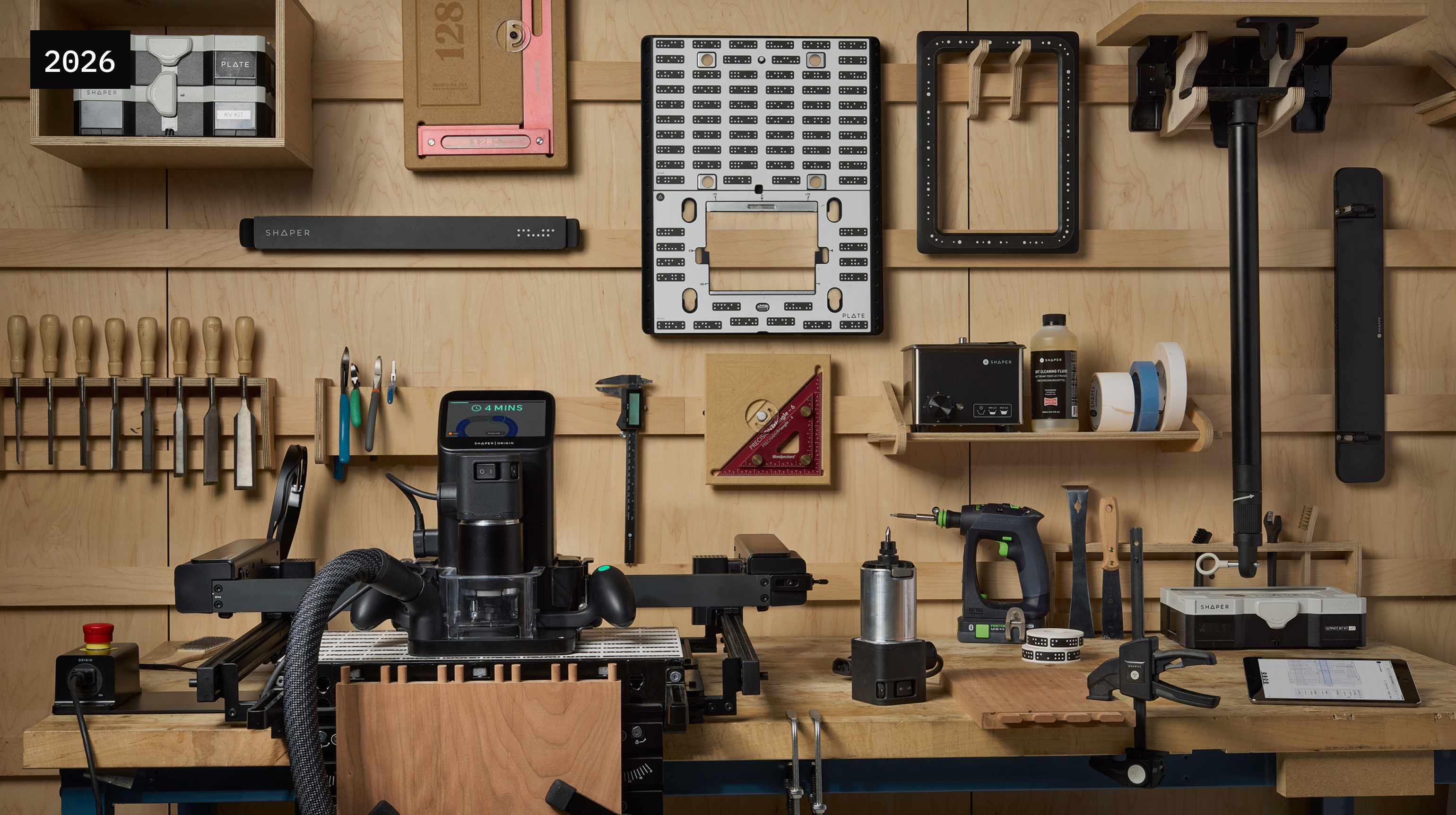
It’s easy to look at Shaper Origin today and simply see a sleek, polished product with beautiful curves and bevels, a snappy touchscreen interaction, and that magical, it-just-works experience, as you glide through a piece of lumber, and put together perfect friction-fit joinery using Origin’s futuristic auto-correct mechanism. But, if we stopped there, we’d be depriving you of everything that came before that moment. The ugly stuff. The failed experiments. The tape and glue.
After 15 years since Origin’s beginnings, and tens of thousands of hours of work across teams of people from around the globe, we’re pulling back the curtain today to give you a sense of what came before and where it all started.
THE BEGINNING
When Alec Rivers inherited his grandfather’s old hand tools, he began building something far bigger than he ever imagined. As he tried to make a picture frame with his grandfather’s tools, Alec discovered the difficulty in making this seemingly simple shape. With his basic skills, he could get close to precise cuts, but "close" meant that his frame had gaps in all the corners. So Alec, a PhD candidate at MIT armed with a computer science background, wondered if technology could help. On leave from his degree, he set to work on a prototype for a handheld digital router that could help people produce precise cuts. And so began a mission to make precision cutting easy and accessible for craftspeople everywhere.
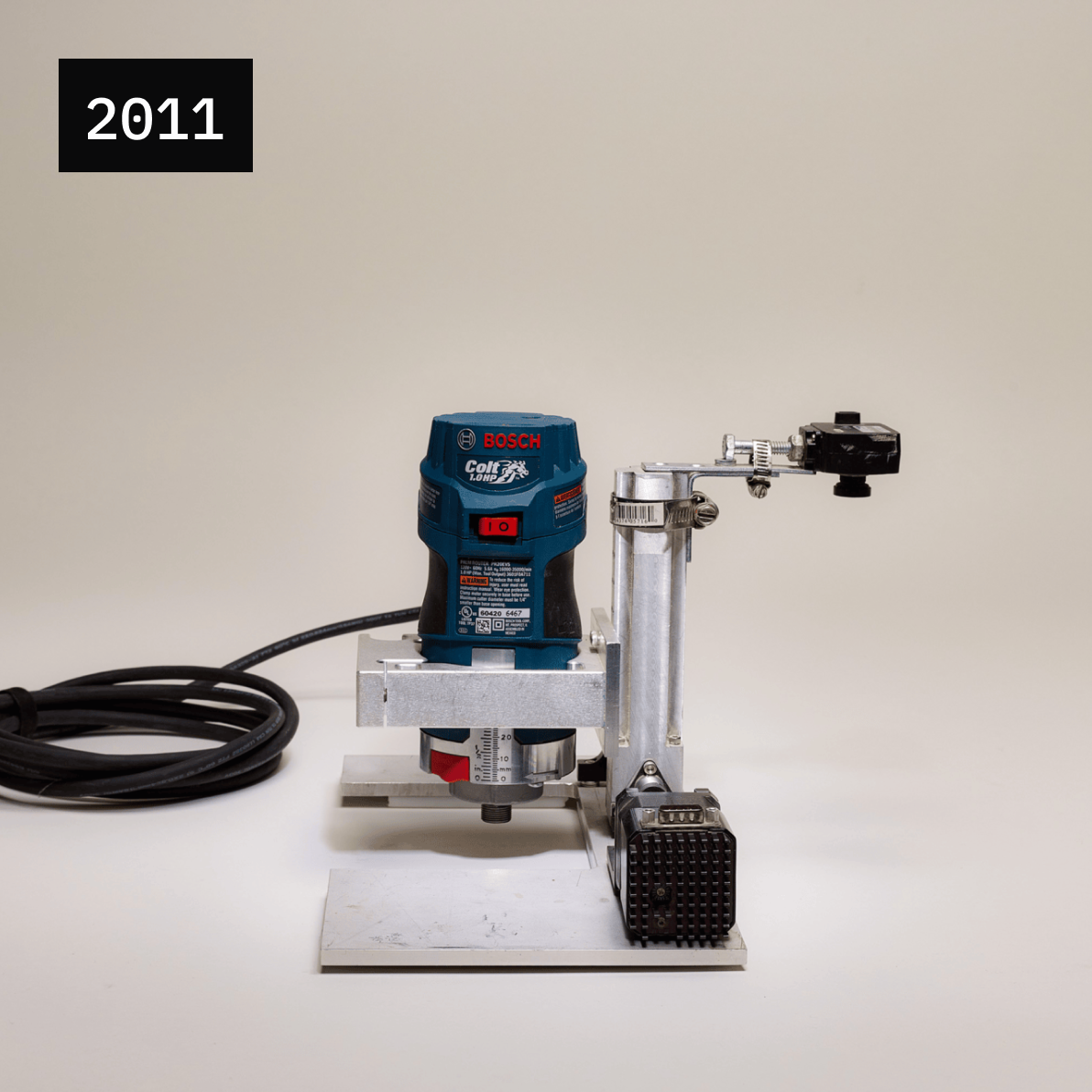
2011
The first one-axis prototype and proof of concept is developed by Alec Rivers while on sabbatical from MIT.
In the fall of 2011, Alec returned to MIT with a prototype for a one-axis handheld CNC router. There he was introduced to Ilan Moyer, one of MIT’s most proficient digital tool designers at the time. Ilan had been immersed in digital fabrication through his involvement with the MIT Center for Bits and Atoms, Fab Labs, and his thesis titled Rapid Prototyping of Rapid Prototyping Machines.
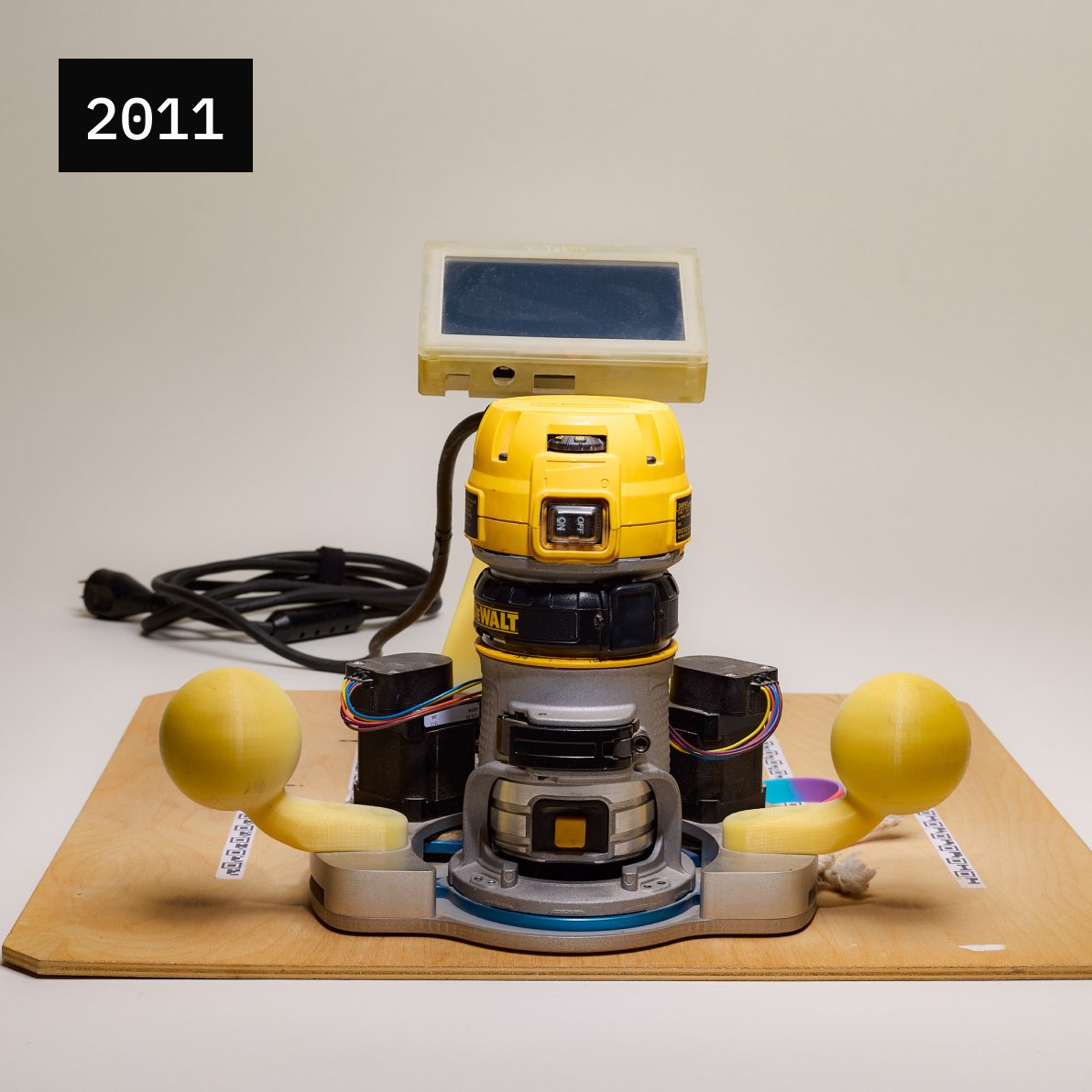
2011
Working together, Alec Rivers and Ilan Moyer developed the first two-axis prototype at MIT, and soon after began the process of going from prototype to industrialization.

2013
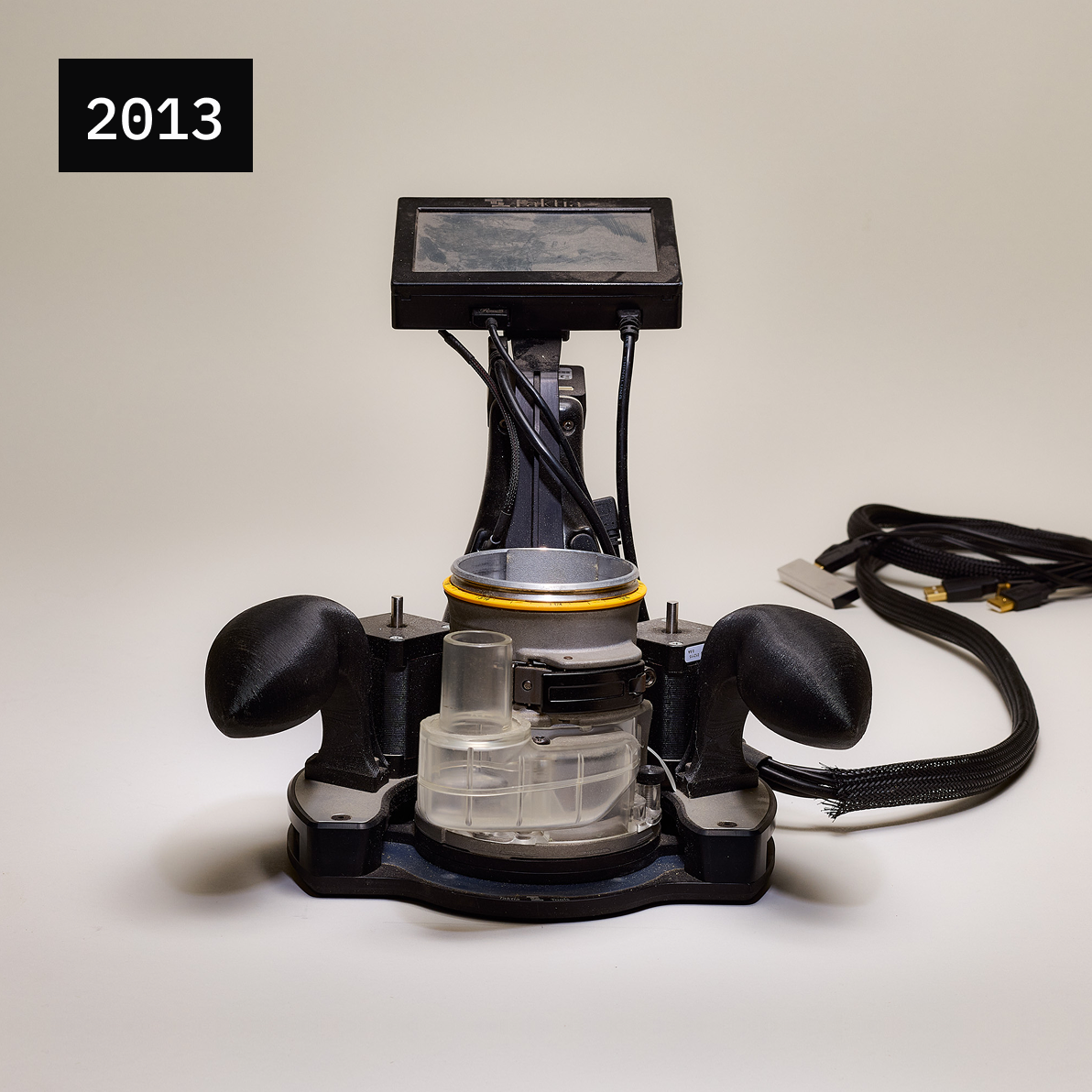
Before Shaper, there was Taktia. Alec and Ilan first made waves among the digital fabrication community showing off the Taktia router at the Bay Area Maker Faire. An initial proof of concept for file syncing can be seen in the video below, demonstrated by Shaper’s first hire, Rob Hemsley. This prototype was internally referred to as “Armstrong,” a namesake for Louis Armstrong. Many of the Origin prototypes that followed would be named after jazz legends.

Shaper takes form
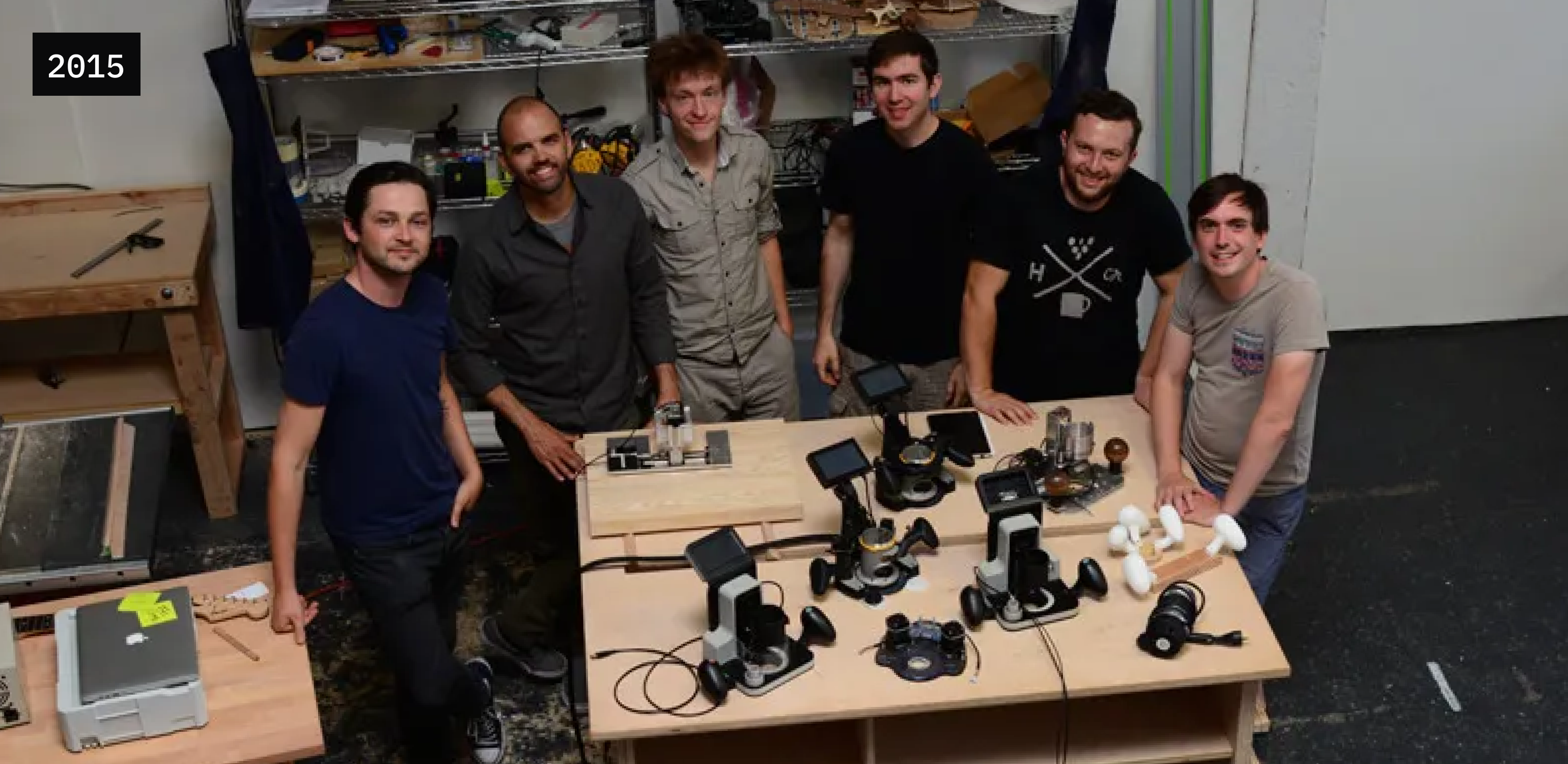
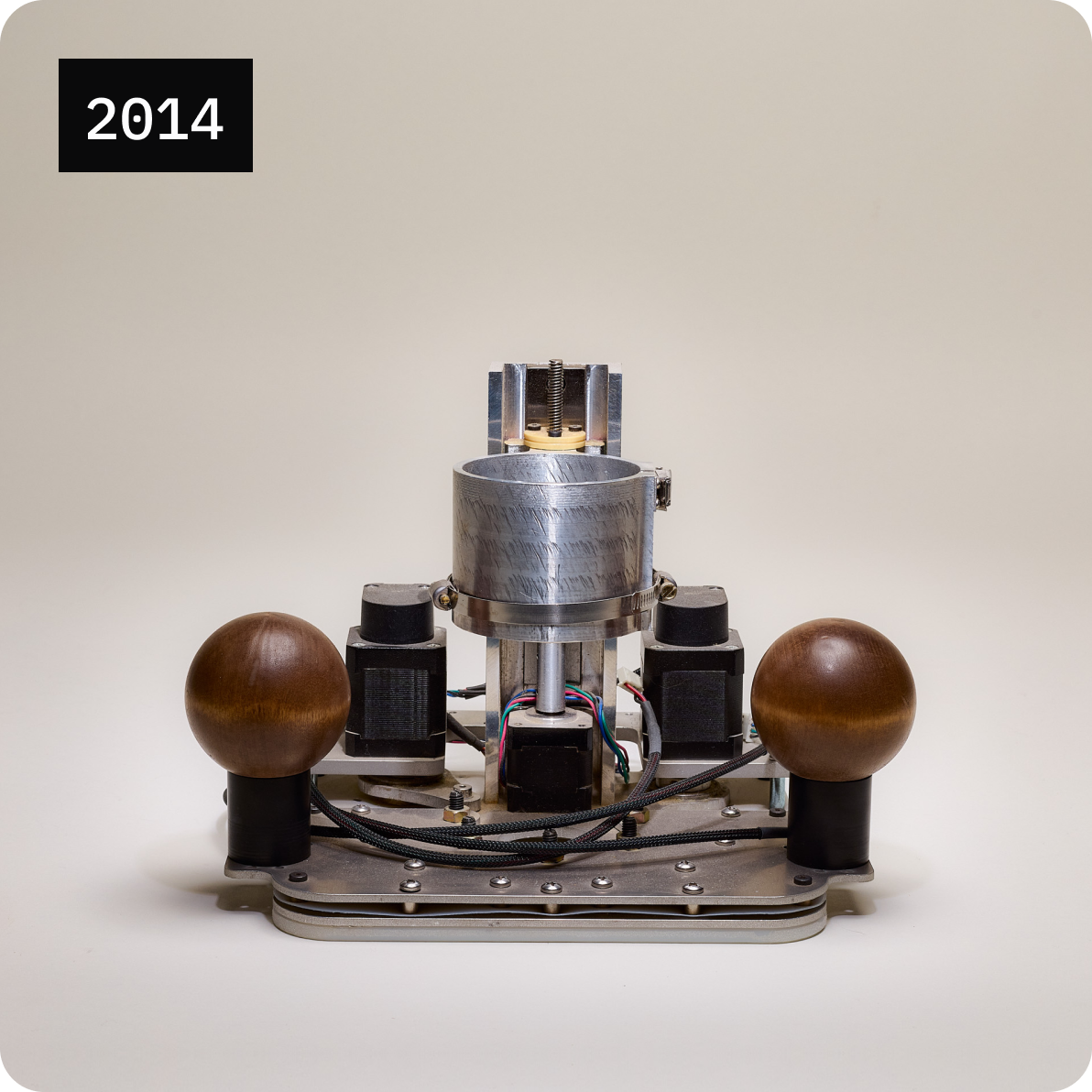
By 2014 Shaper had come into existence. The team moved operations from the East Coast to the Bay Area. By 2015, the team made key hires including Joe Hebenstreit – then Google Glass product development leader – as Shaper’s CEO, and notably rebranded from Taktia to Shaper.
2015
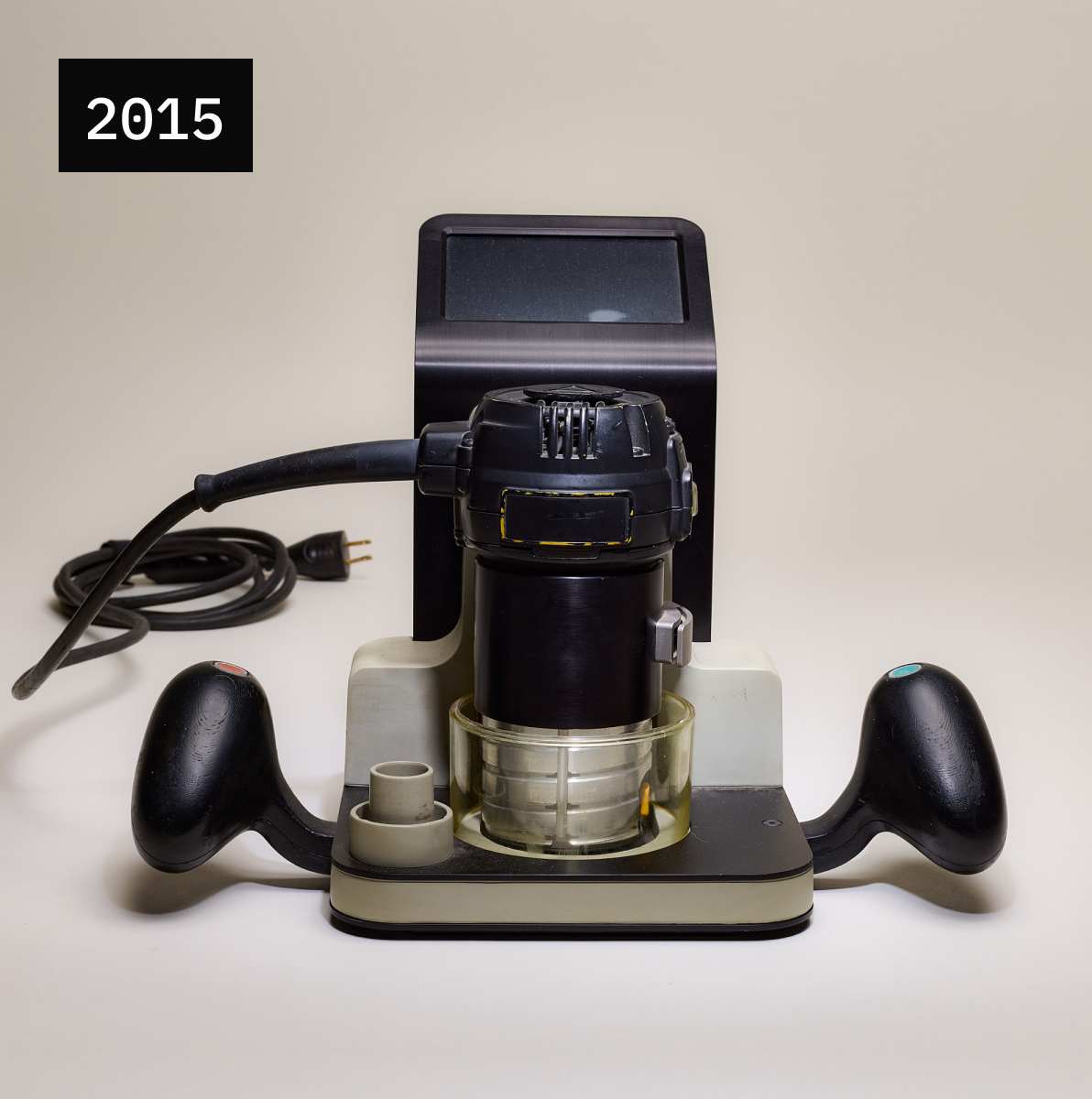
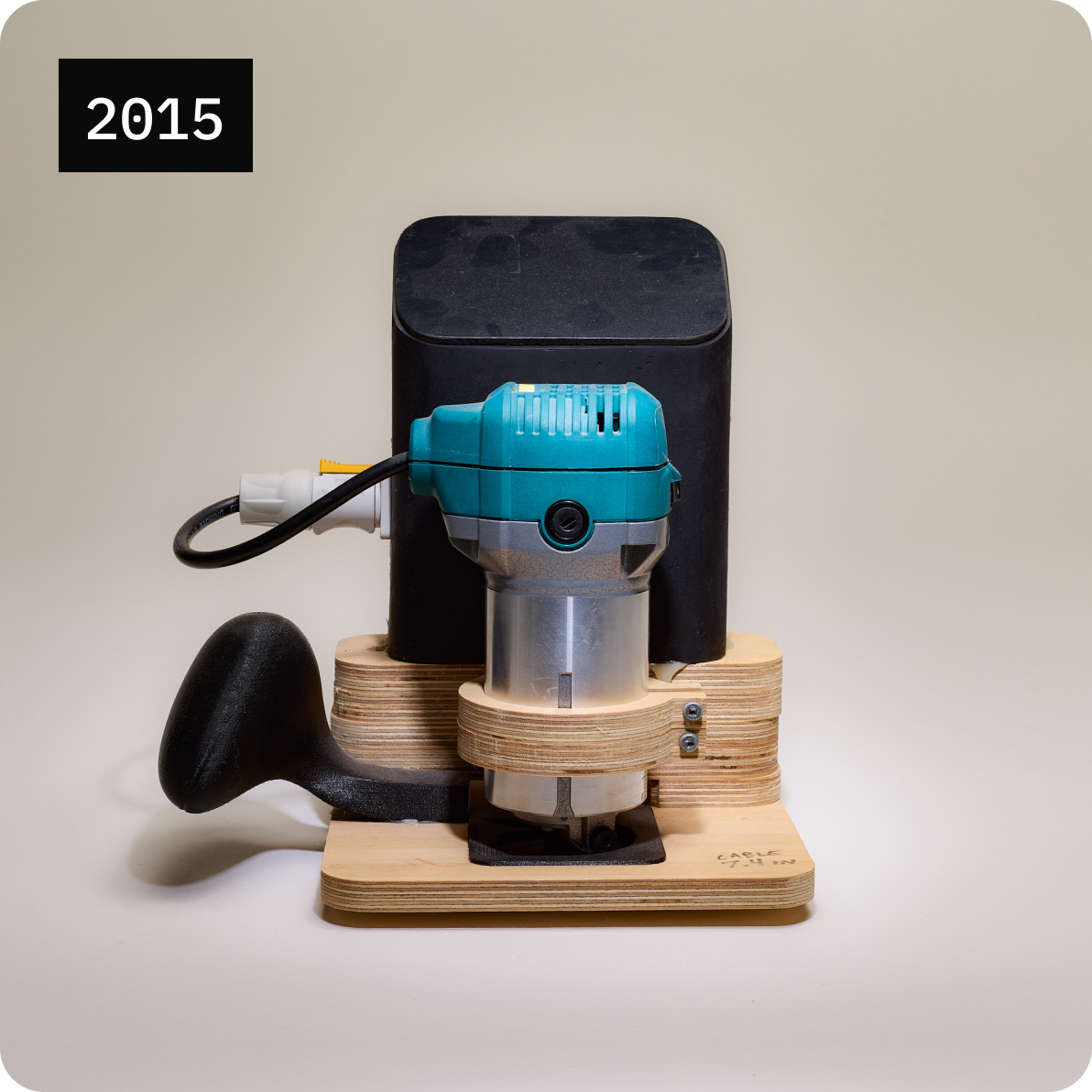
The prototype internally known as Brubeck was a major milestone for the team, as Origin first came to life with Z axis control and 2.5D milling capabilities. This prototype was entirely controlled by a separate computer, usually stored under the table. Several Brubeck prototypes were hand-assembled at this stage and were used to gather feedback from woodworkers in real shop environments.
ㅤ
Incorporating wooden handles to give the “feel” of a hand plane.
ㅤ
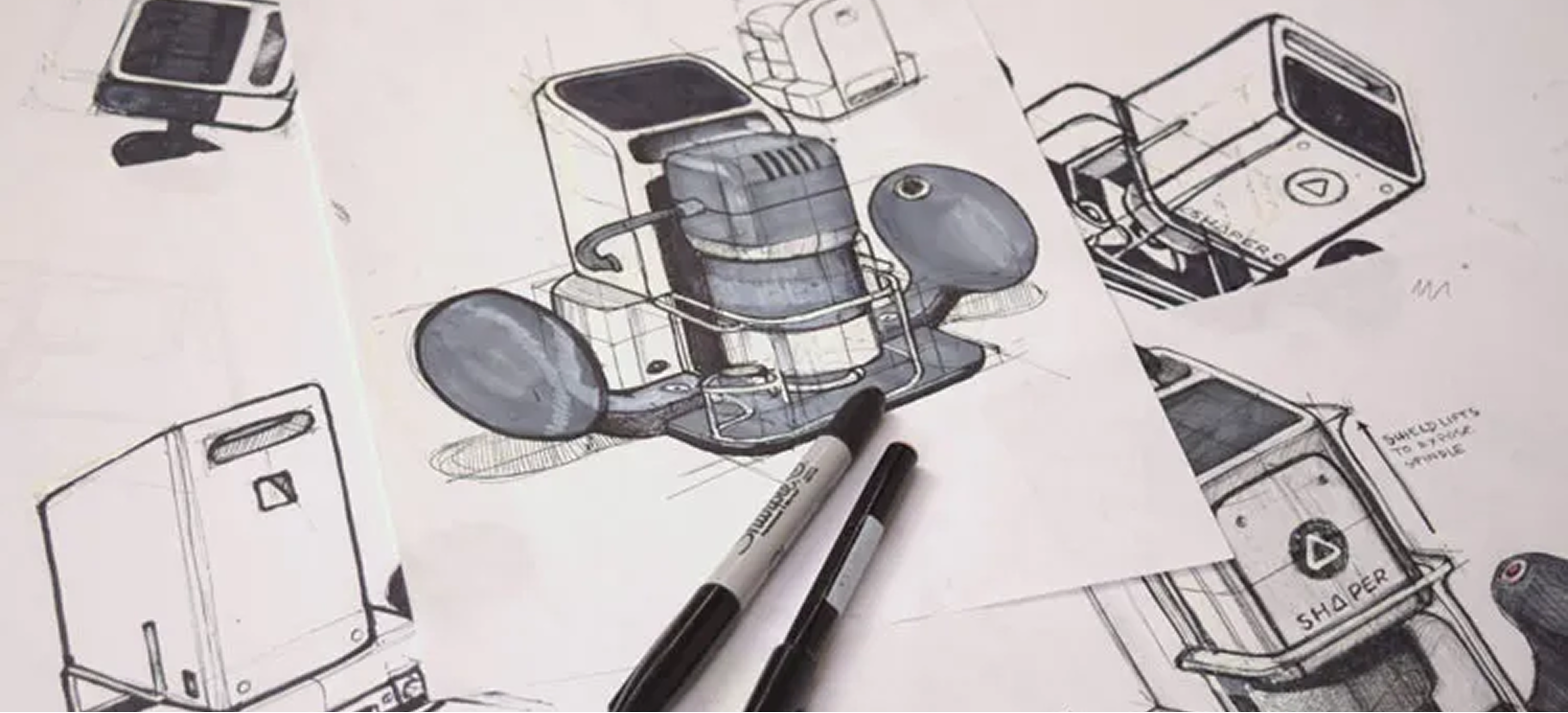
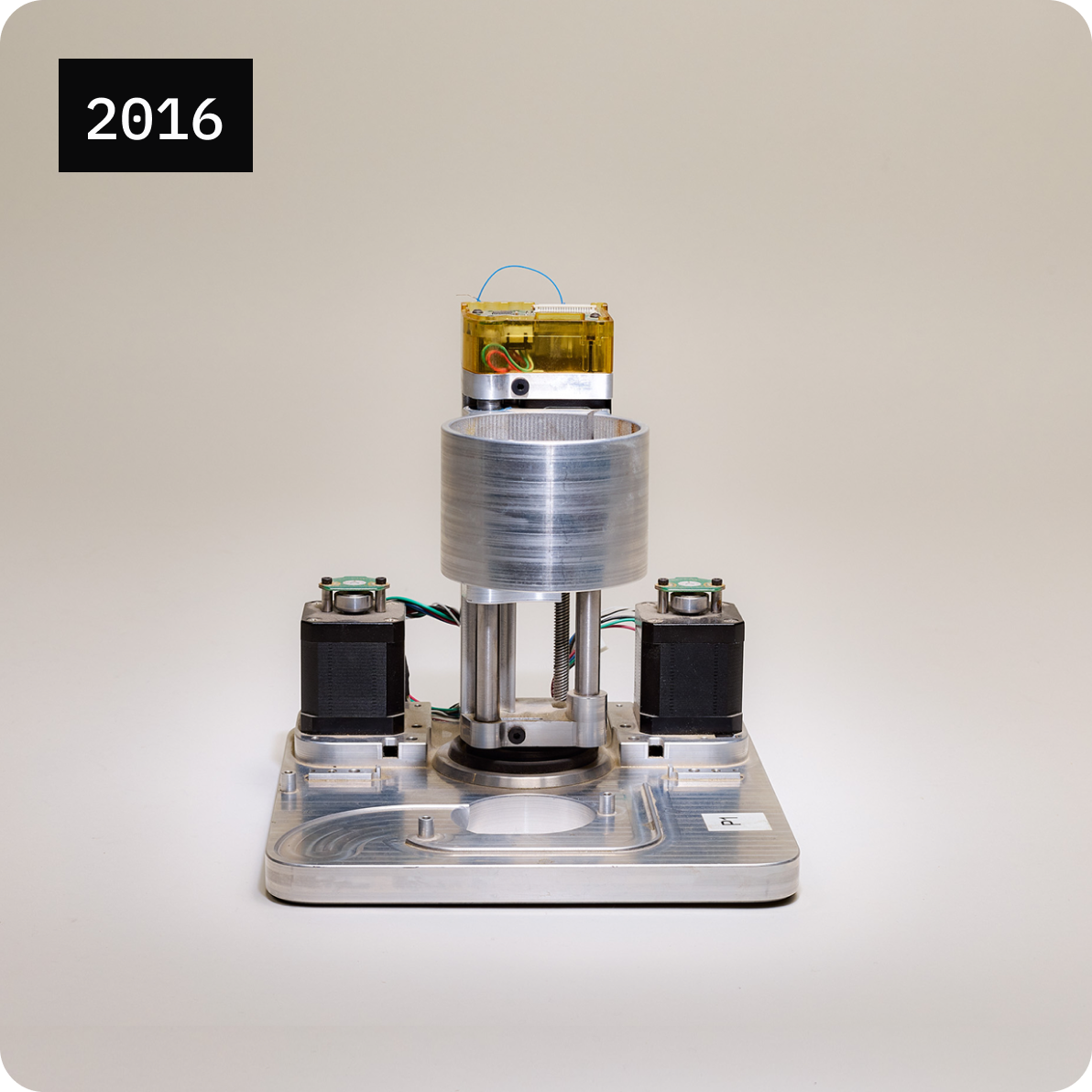
Industrial design explorations in the lead-up to the next prototype.
ㅤ
Z-axis and Origin base development
.
Tools for tool makers
Origin was “early” technology in 2011, and in many ways is still “early” technology in the power tool industry today, despite being on the market now for ten years.
From the first prototype to the current in-market Origin Gen2, Shaper’s engineering team has tirelessly designed and developed tools to test, validate, and even manufacture, parts of the Origin ecosystem.
Shaper tape Development
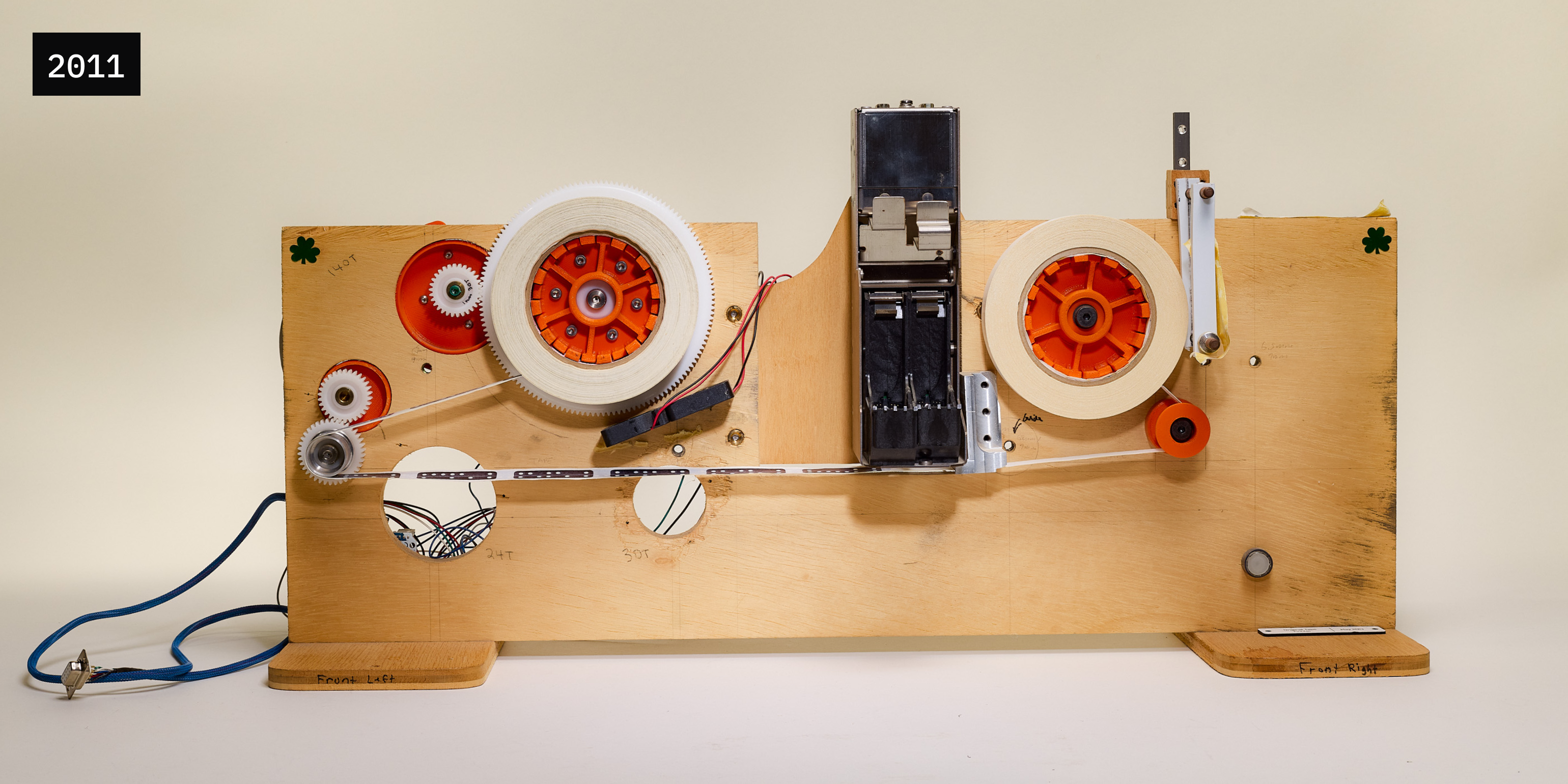
Without ShaperTape, Origin isn’t able to do much of anything. In order to develop and refine Origin’s vision and motion control systems, the tape needed to be produced and developed in parallel with other work happening at the time. It also needed to be produced precisely and accurately for the computer vision systems on Origin to function properly. To do so, co-founder Ilan Moyer developed the first ShaperTape printing machine. This was essentially a reel-to-reel mechanism which printed domino patterns and rewound the tape with a fan in between to dry the ink.
Testing Adhesion and abrasion
When the team finally selected a tape manufacturing partner, they still needed to validate which coatings and adhesives had the most ideal characteristics. To validate findings, they designed an automated abrasion-testing machine to very repeatably scratch away at each type of tape to determine which version would be the most robust in the field.
Refine, Refine, Refine
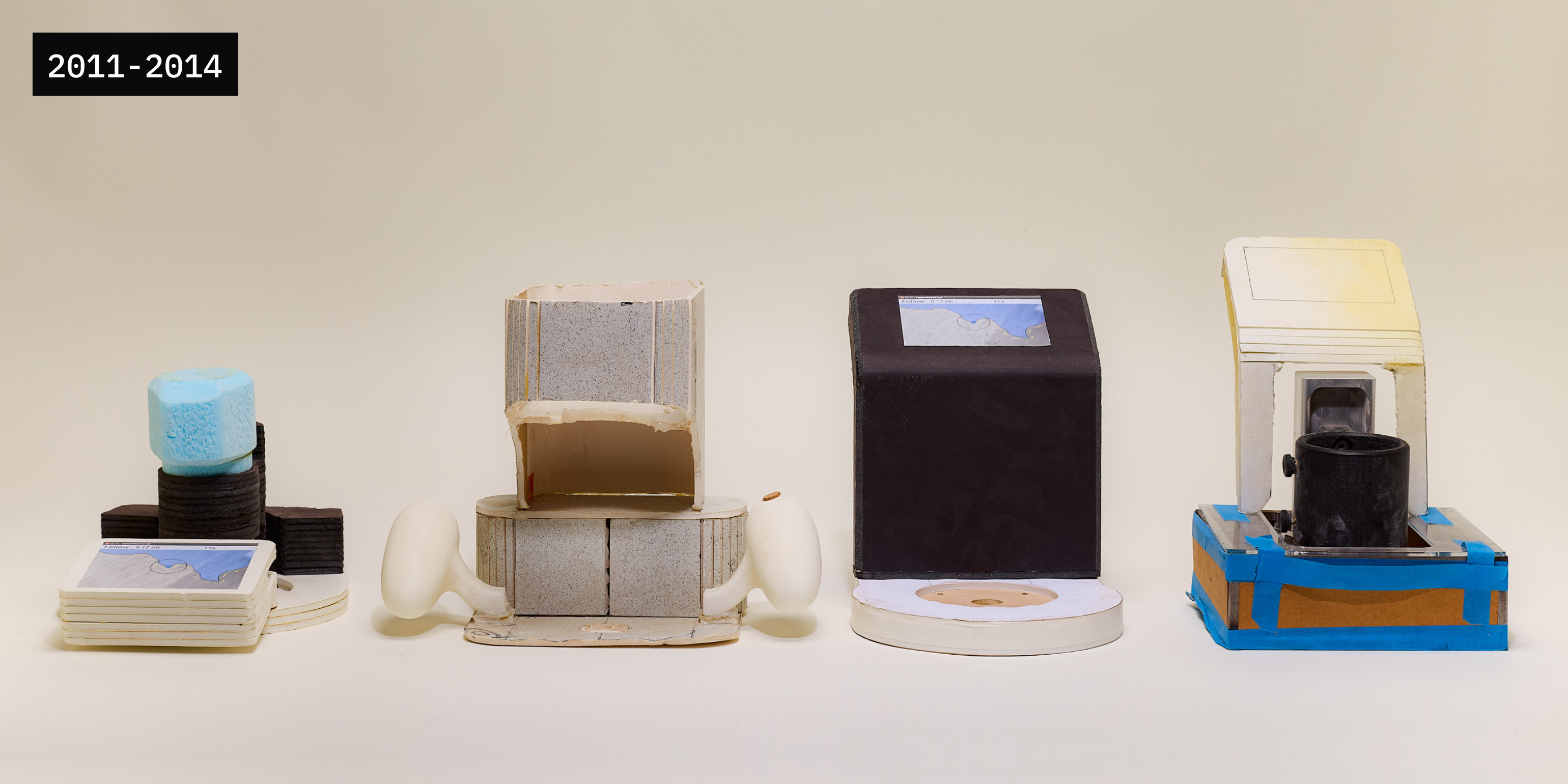
Throughout 2015, Shaper designers used foam, bondo, cardboard, and other simple materials to rapidly iterate through Origin design concepts. Using materials like these enabled the team to quickly get a sense of scale and ergonomics of the various directions. Design mock-ups like these are also used to conduct what are known as volume studies into the available space for functional components, like electronics and motors.
.
.
Z Axis Development
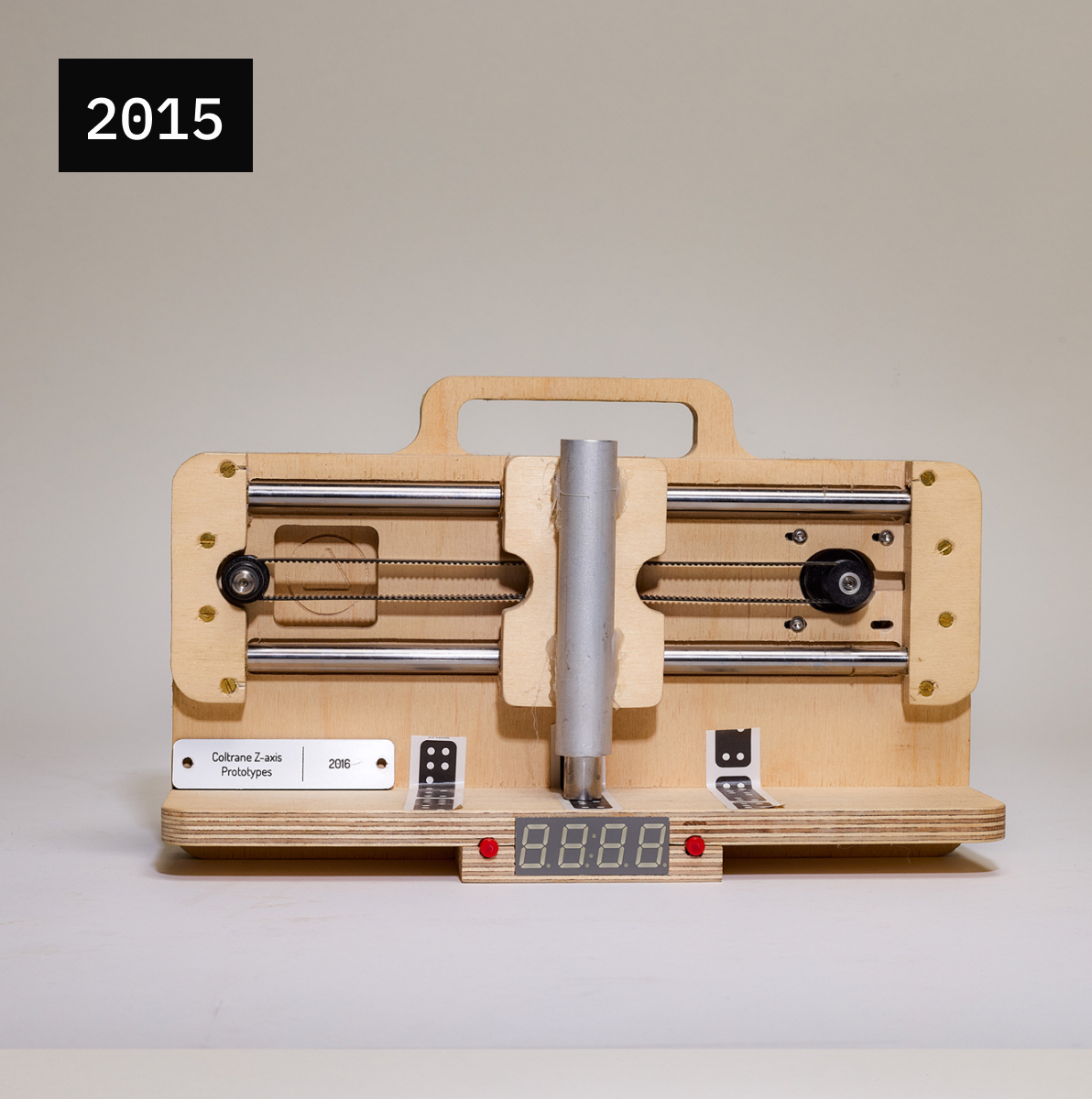
In order to optimize Origin’s electromechanical design, the team developed multiple competing prototypes. The Z-axis prototypes here show a few of the architectures that were designed, built, and evaluated across dozens of metrics: manufacturability, repairability, dust resistance, holding and drive torque, retraction speed, rigidity, and overall cost.
The heart of the system
Carefully tucked away inside Origin is an entire computer and motion control system. To achieve this, a custom set of electronics purpose-built for the needs of Origin were required. Electronics were designed in multiple discrete boards each with different functions. This enabled different fabrication technologies to be used for each board as a function of its application. For example, the power supply board has thicker copper to handle power delivery, while the System-On-Module board has 10 ultra-thin copper layers sandwiched into a 1mm thick fiberglass board to handle the millions of signals being transmitted every second by Origin’s CPU and memory.
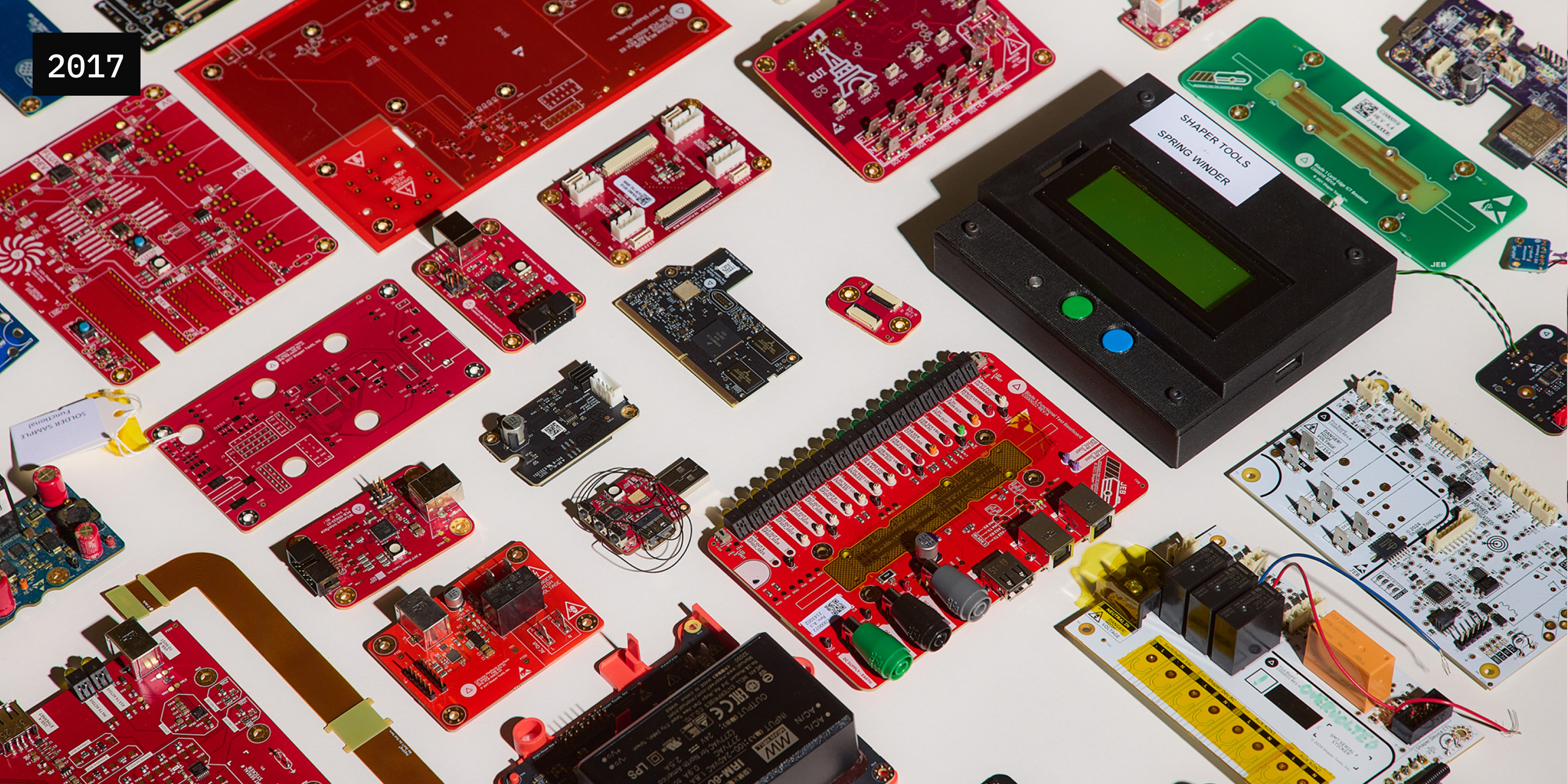
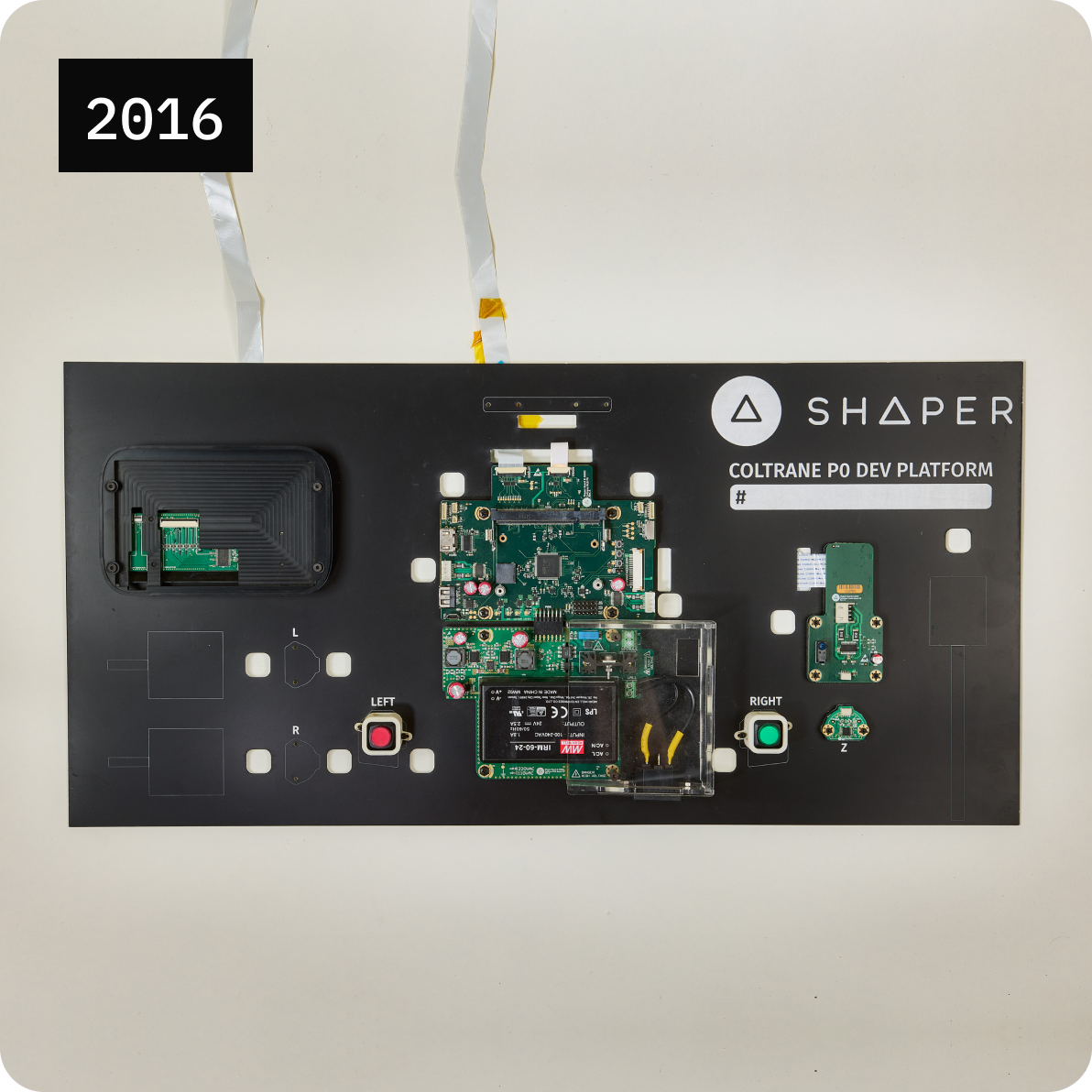
Coltrane P0 Developer Platform
The first prototype set of electronics for a form-factor Origin Gen 1
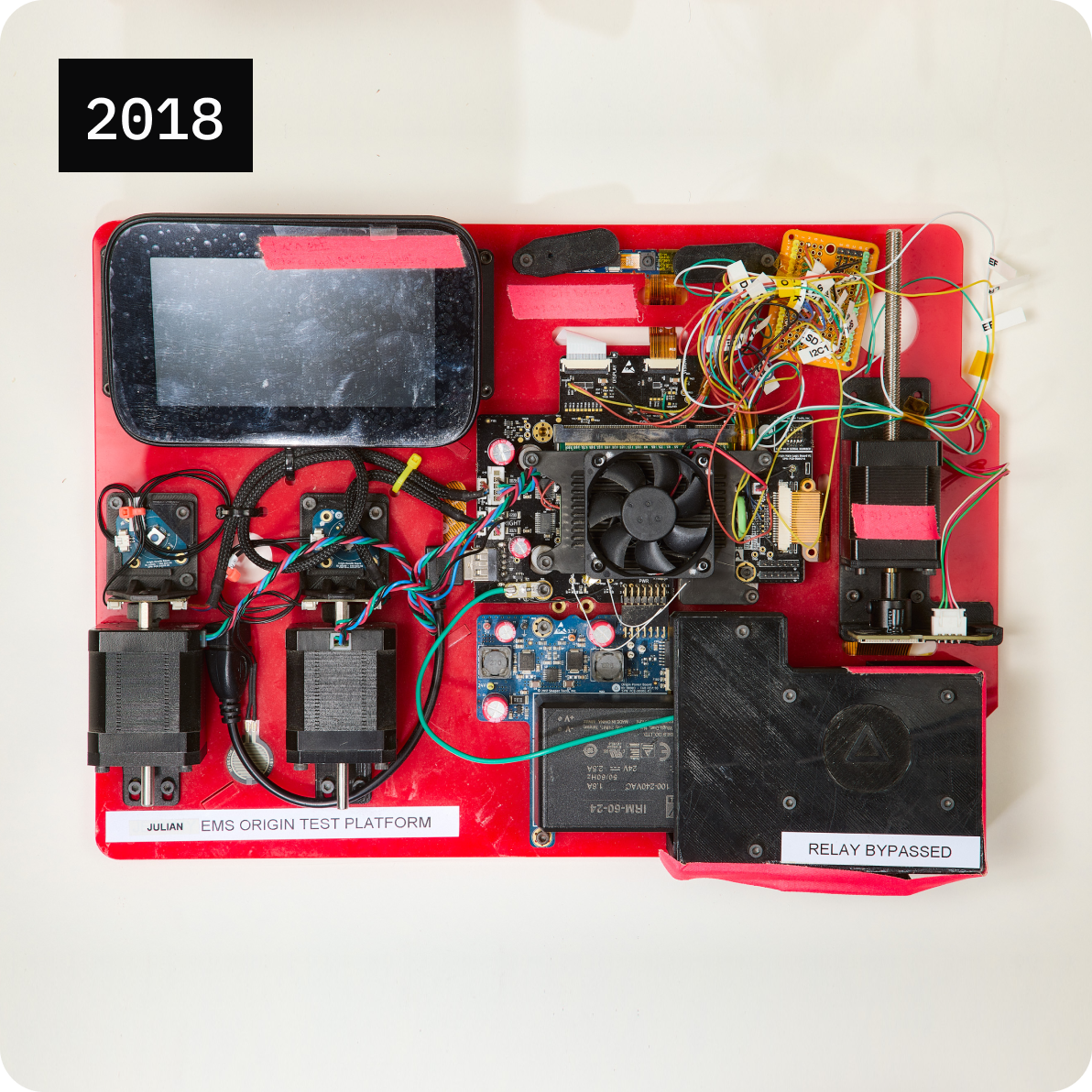
Coltrane MP Eval Platform
"Platform Boards" continue to be used even after entering mass production to facilitate software development and evaluation of replacement parts and suppliers.
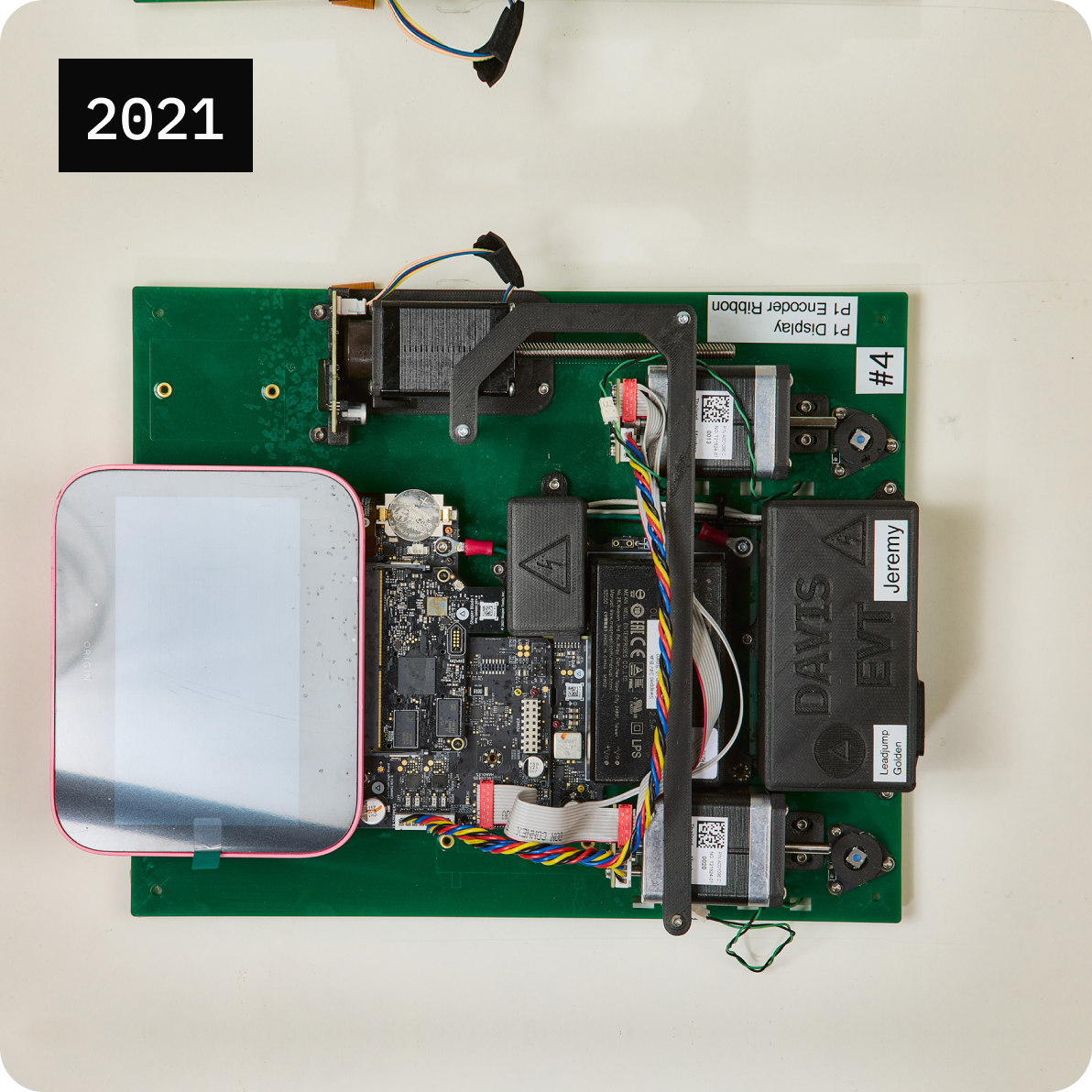
Davis EVT Platform
This Origin Gen 2 platform was used by the embedded team to bring up Shaper's Linux operating system on the fully custom "Shaper Blade 1" System-on-Module that powers Origin Gen 2.
2016
By 2016, the Shaper team had refined the industrial, mechanical, and electrical design and launched a crowdfunding campaign on their own platform to bring Origin to market – a major milestone for the team!
Origin at this stage, however, was still far from ready for mass production, and a separate cable still needed to be attached to an off-board computer in order to run.
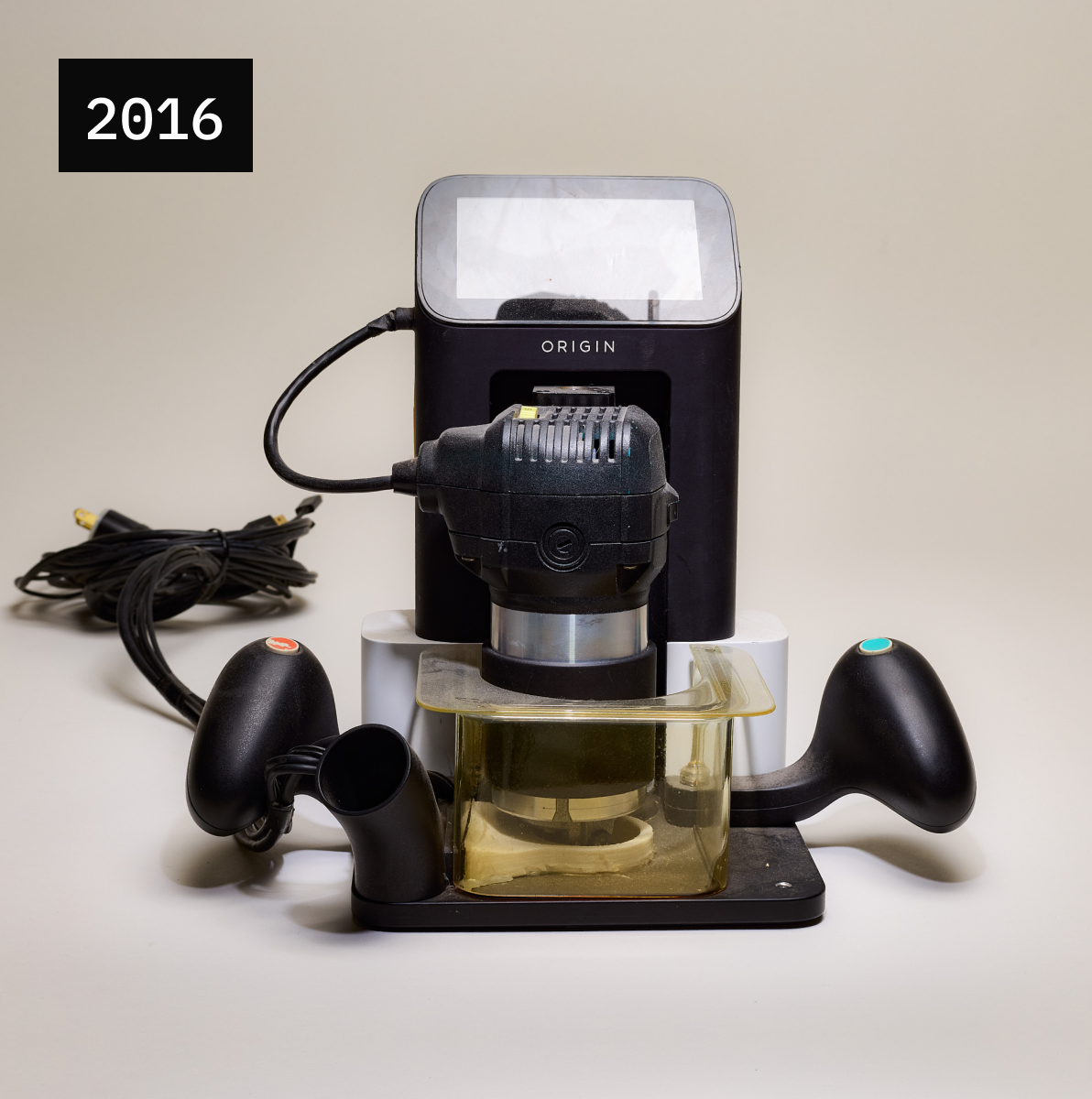
Shaper X Festool
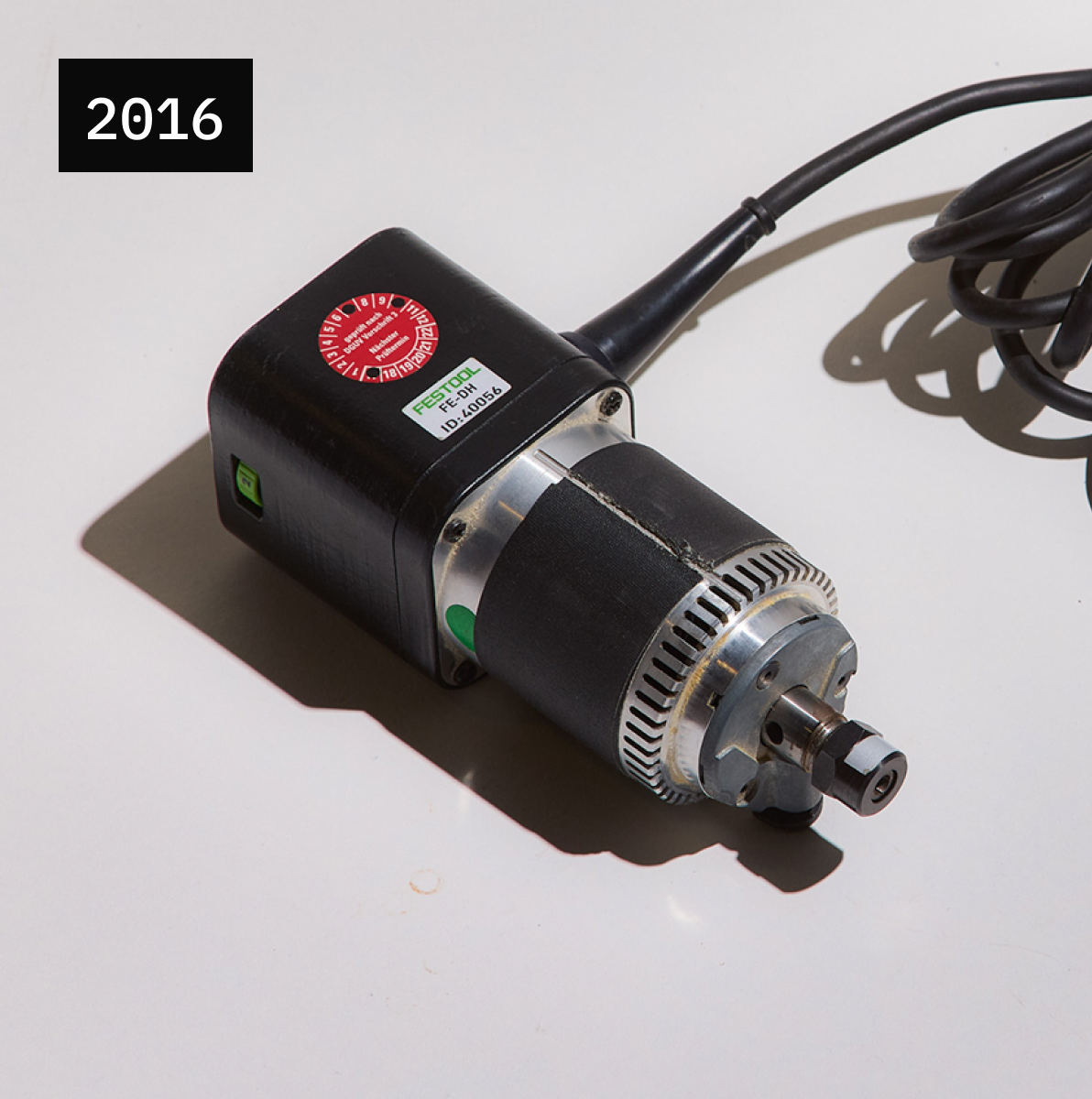
As an early investor in Shaper, TTS Tool Technic Systems – the now-parent company of Shaper, Festool, SawStop, and other premium power tool brands – stayed in close contact with the Shaper team and ultimately paved the way for an engineering collaboration between Festool and Shaper to develop the router motor used by Origin. Shaper knew at the time that they didn’t want to reinvent the wheel when it came to a router motor, so instead were seeking a best-in-class parter.
2016
The first Festool and Shaper collaboration begins with the Shaper Origin SM1 motor development.
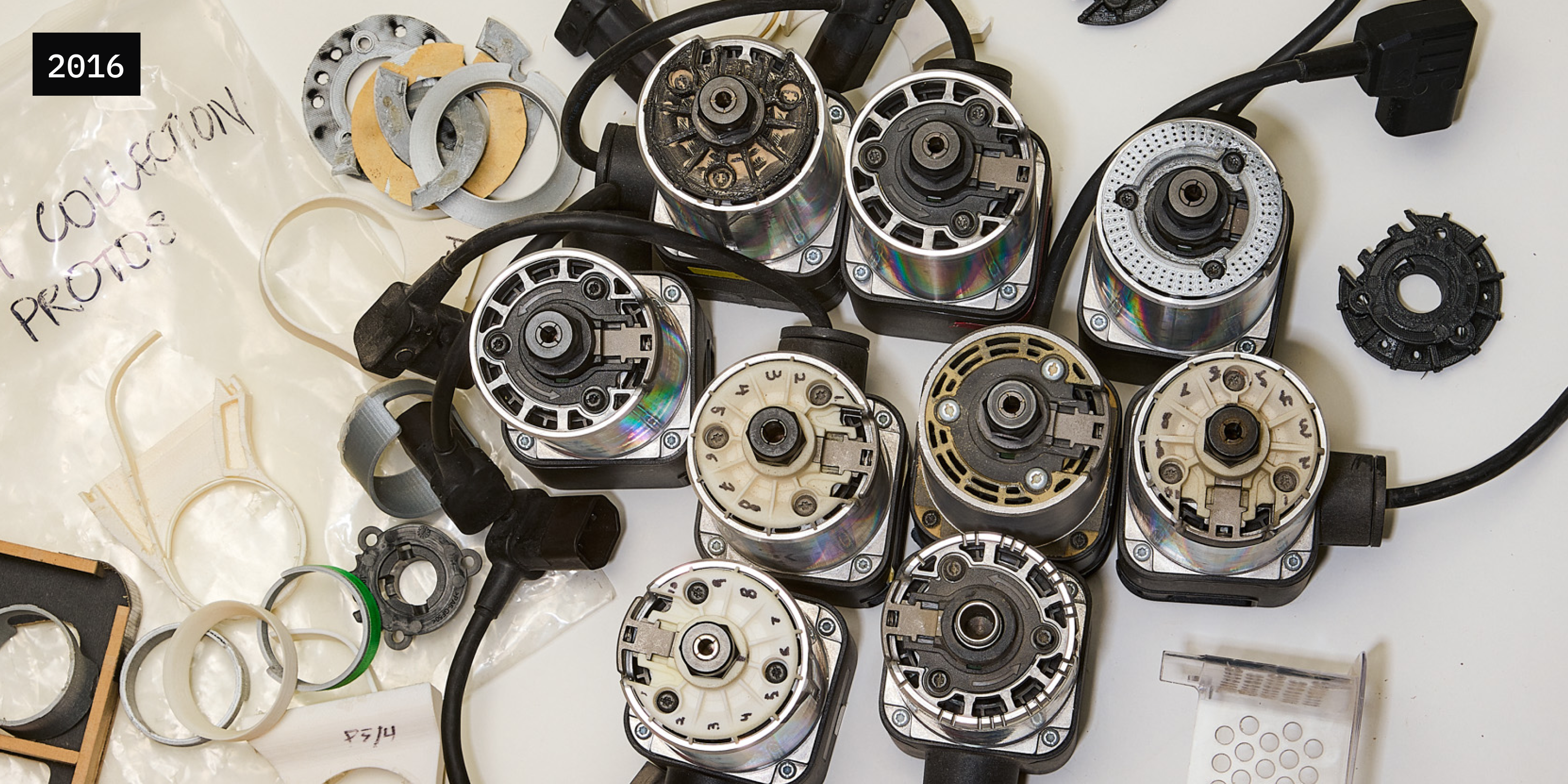
Countless prototypes were developed with the Shaper and Festool teams in order to best maximize airflow, chip evacuation and cooling for the SM1 motor – all in an incredibly accelerated timeline to meet pre-order delivery goals. In the picture below, you can see the various iterations of the motor housing.
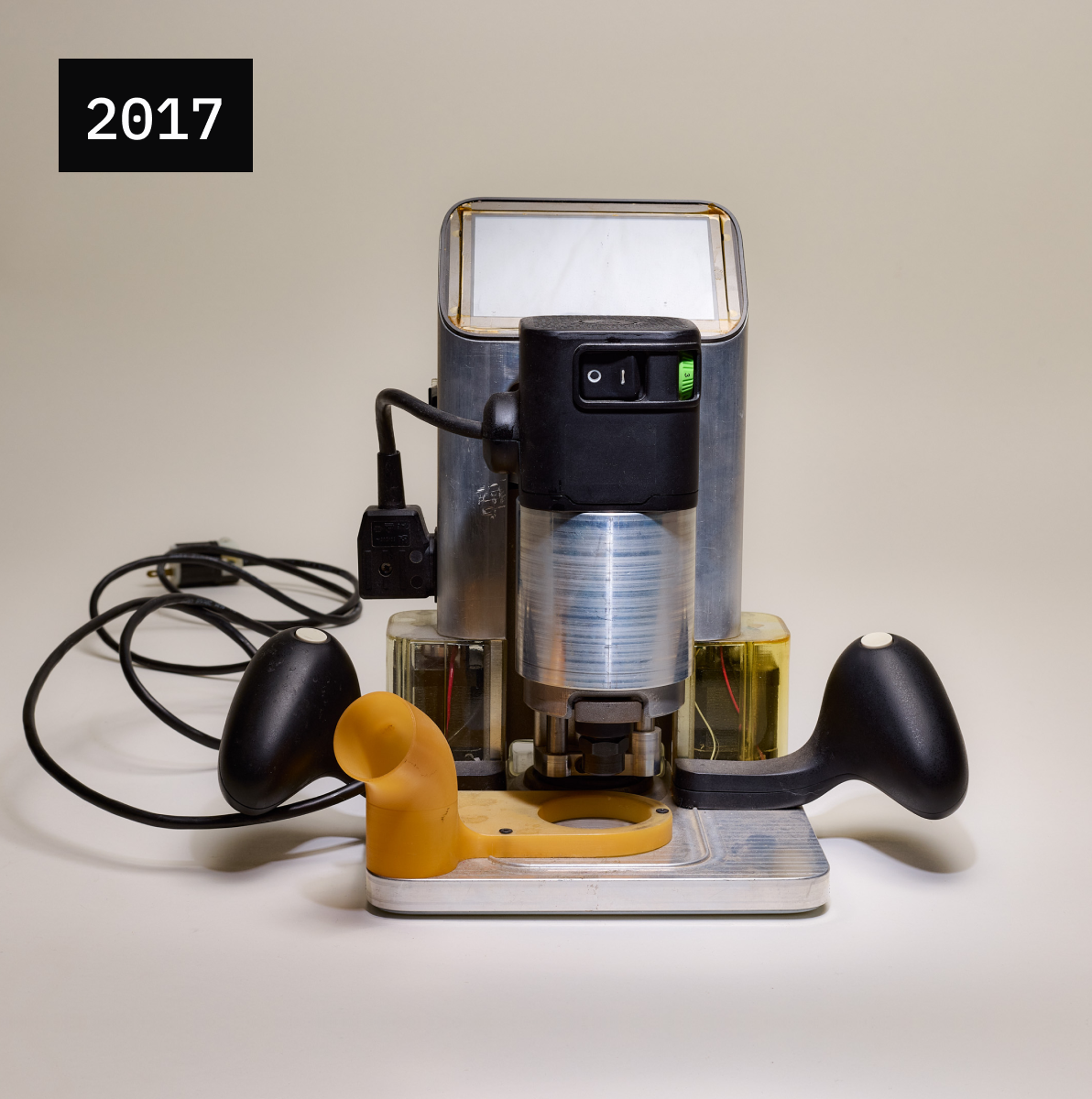
2017
Getting closer to mass production, this prototype featured the Festool spindle update. Note that on this early prototype, the motor control knob was Festool green.
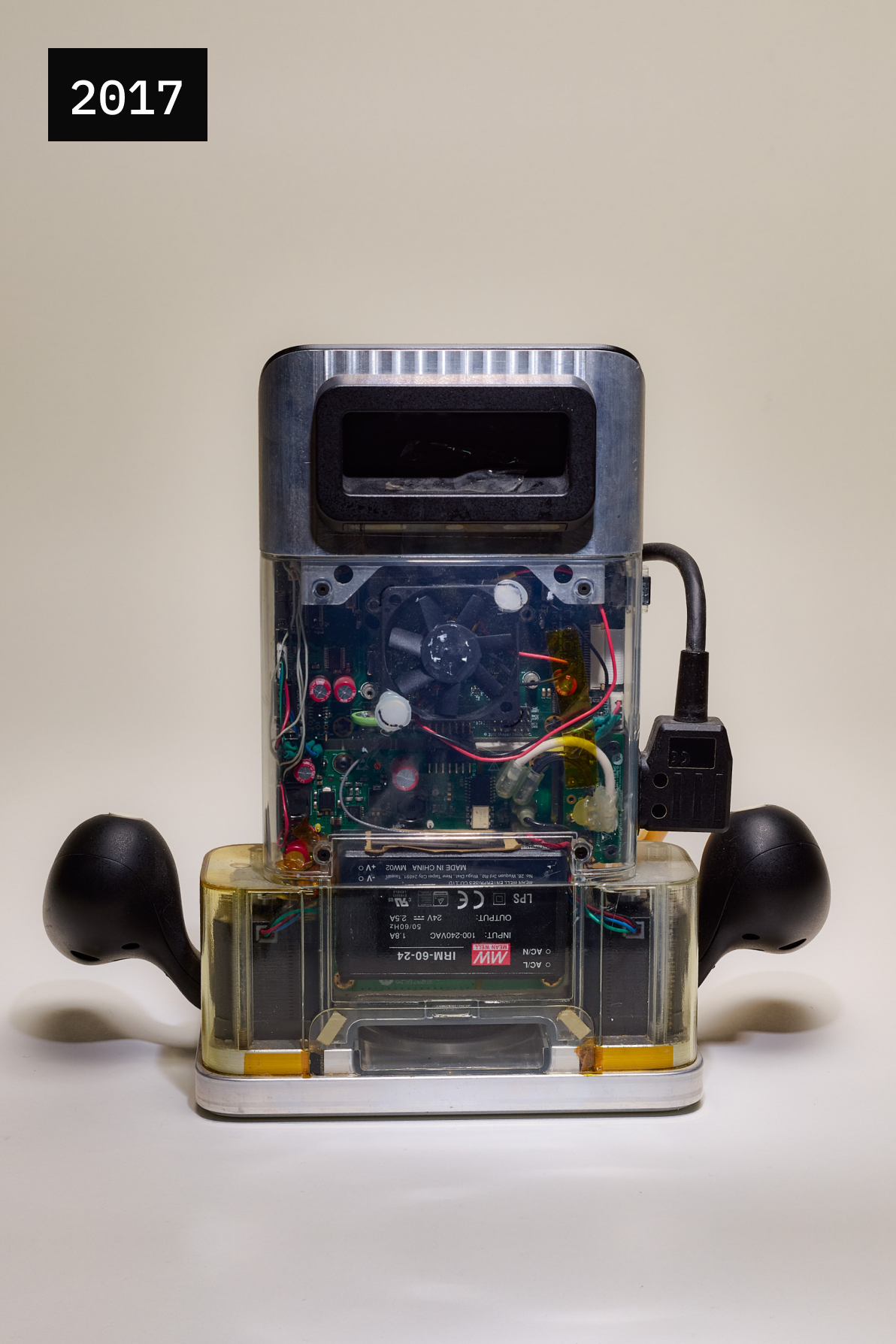
2017
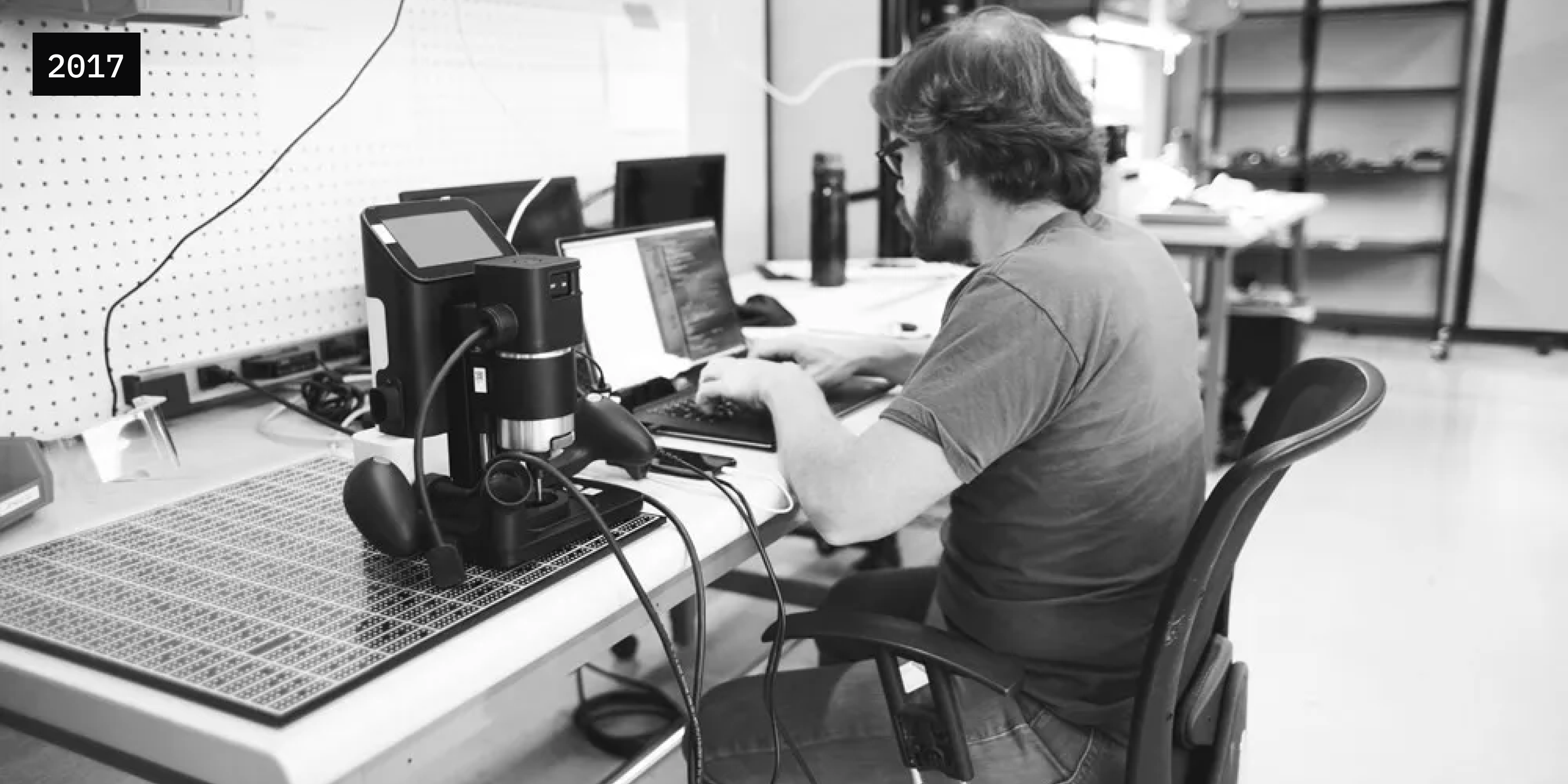
System electronics underwent multiple architectural revisions to arrive at a design that would fit in Origin, meet all of the compute requirements, and operate within the environmental parameters desired. The internal mantra of “one cord to the wall” was finally achieved.
Road to mass production
In 2017, Shaper began mass production in San Diego, California, where the close proximity to the team’s headquarters in San Francisco allowed Shaper to dial in the production process. Once the production process had been optimized in San Diego, it was moved to Singapore, where the proximity to component suppliers enabled faster production and iteration. Along the way, thousands of hours were spent refining the process, from vision system calibration to mechanical controls, to ensure the most reliable platform possible.
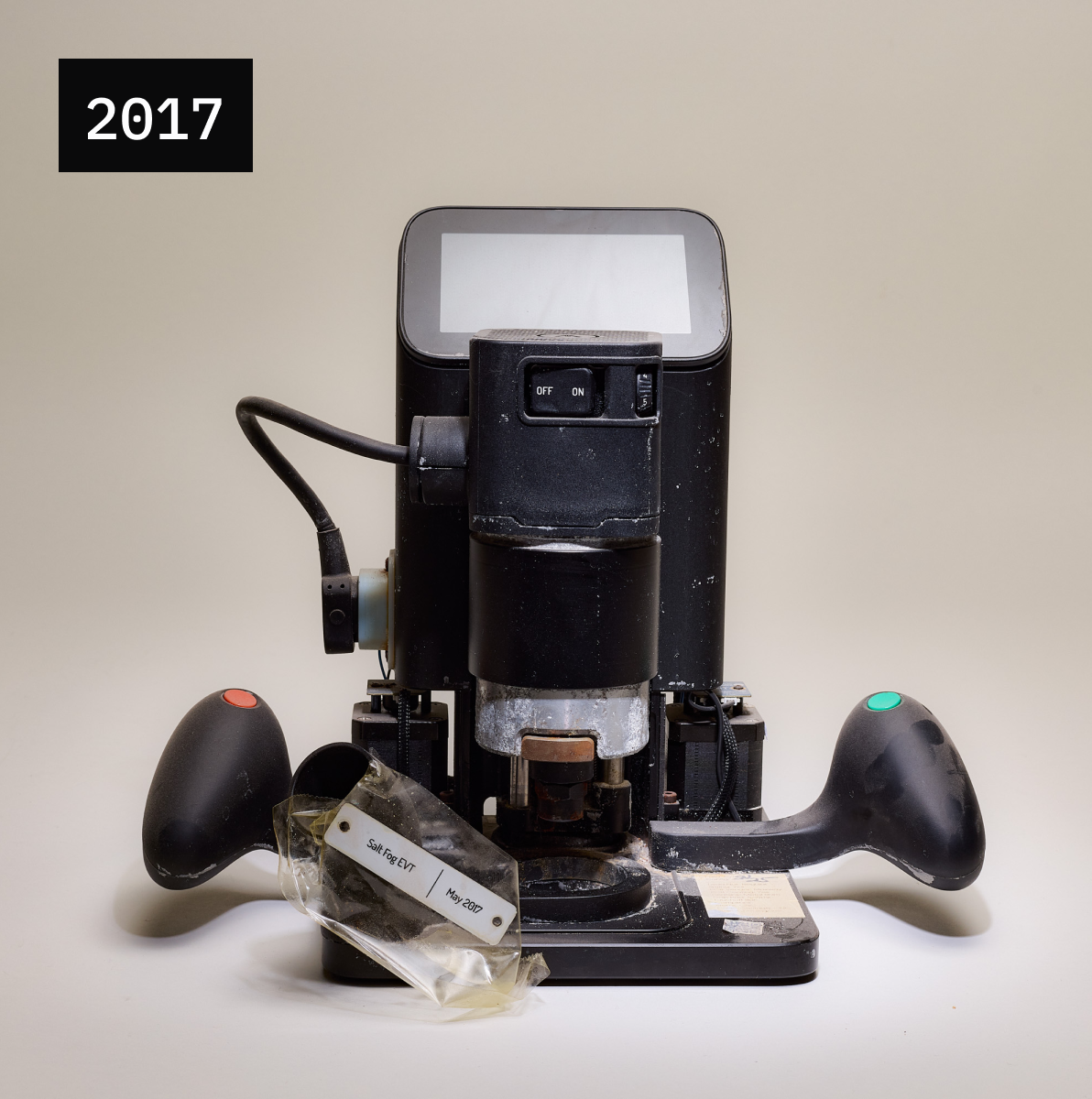
2017
Testing, testing. Before mass production, Origin underwent multiple forms of validation testing. In order to learn what would happen to Origin under extreme coastal conditions, this unit was bathed in a salt fog for hours. This testing resulted in Shaper choosing to conformal-coat all the PCBAs, and to change the plating on all fasteners.
2017
By the end of the year, Shaper shipped the first wave of Origins to supporters of their crowdfunding campaign. Internally, referred to as “Coltrane,” this unit became what is known today as Origin Gen1.
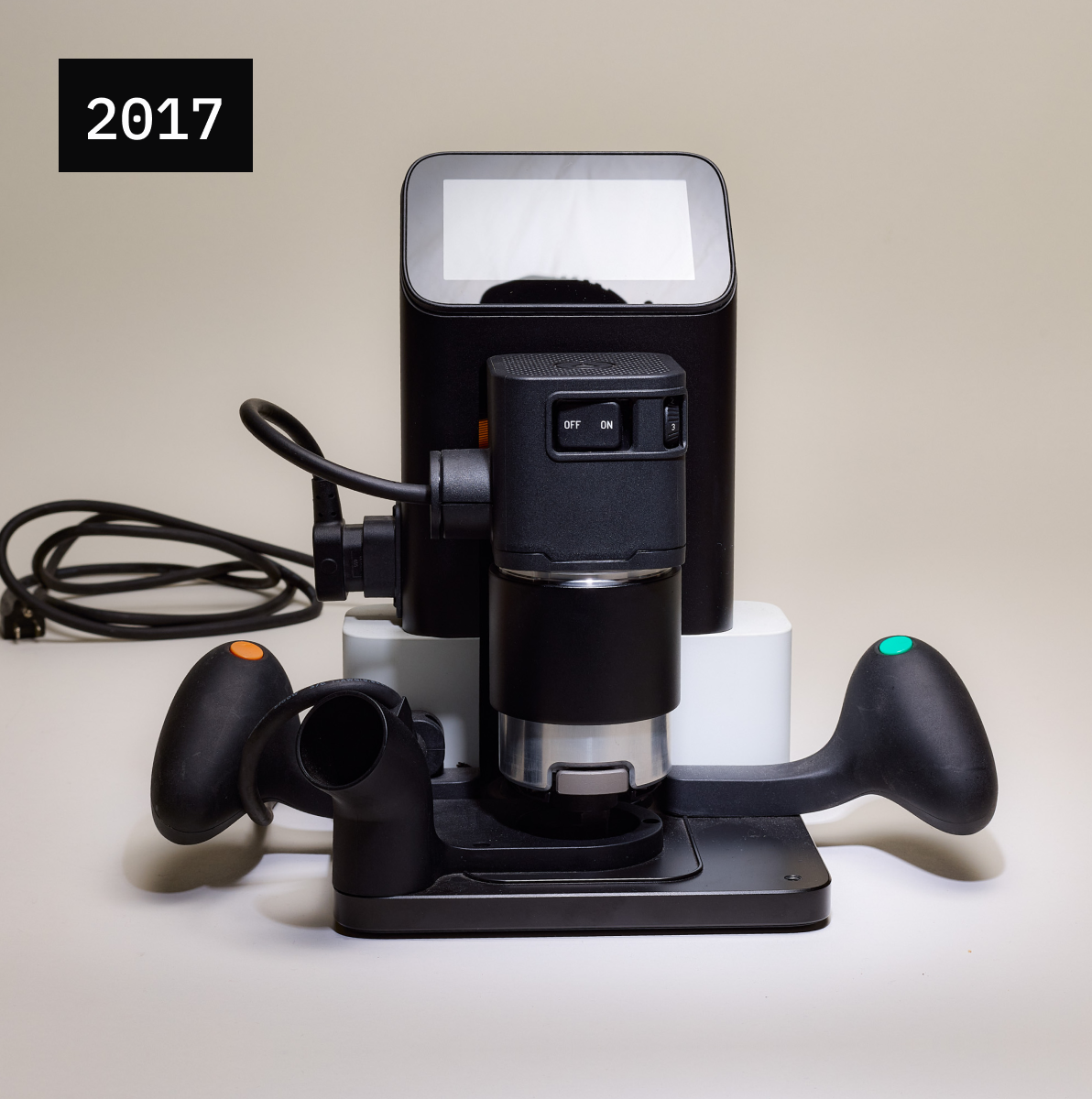
designed and engineered in California by Shaper, manufactured by festool in germany.
In late 2018, Shaper was officially acquired by TTS to sit alongside other top power tool brands Festool, SawStop, Tanos, and others. A year later, the team again set their sights on refining Origin, and thus began the development of “Davis,” or Shaper Origin Gen2, with the ultimate intention of bringing the manufacturing and assembly line to Weilheim, Germany. Today, Origin continues to be designed and engineered by Shaper in California and manufactured by Festool in Germany.
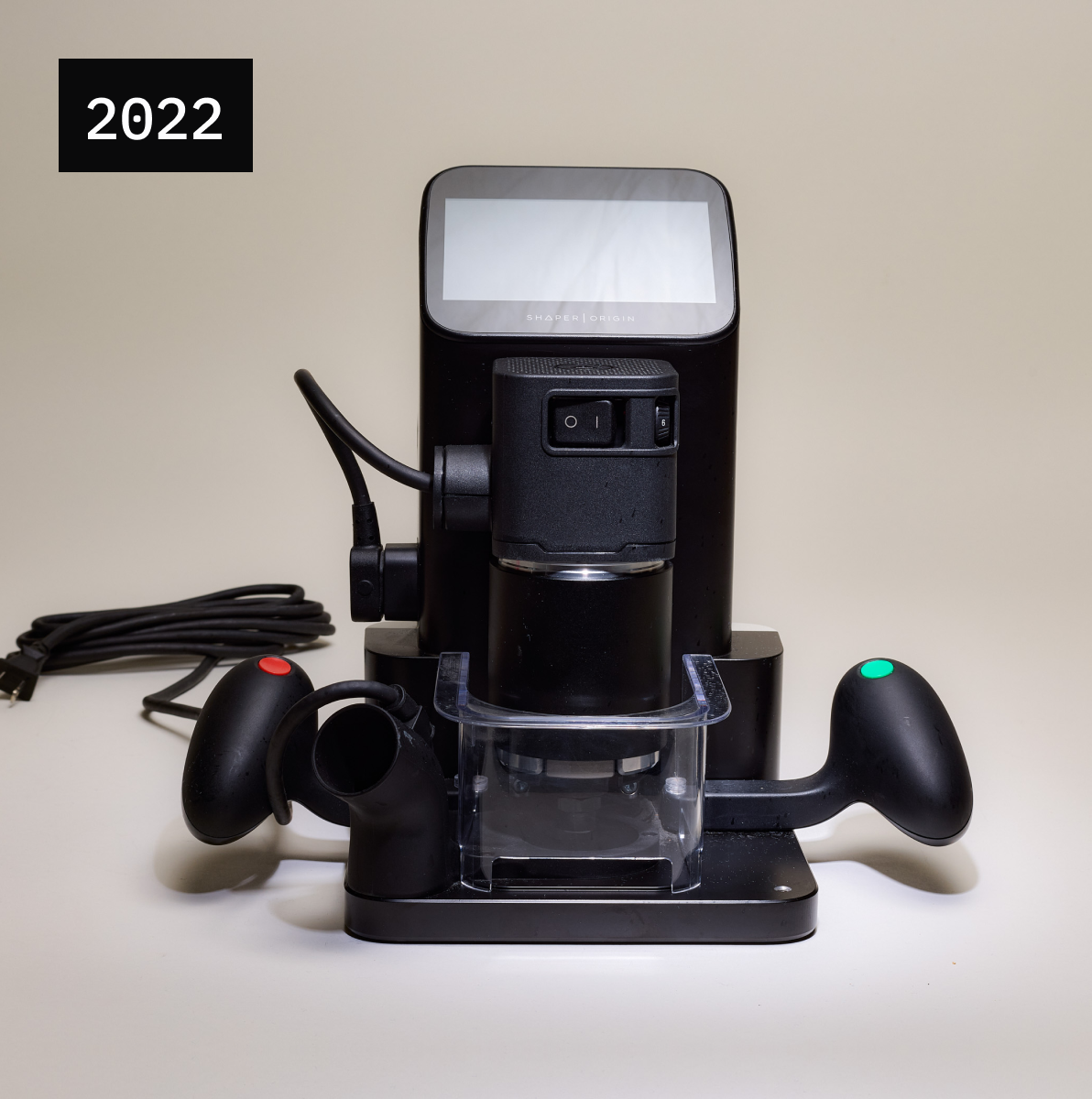
2022
Shaper releases Origin Gen2, complete with updated electronics, a unibody design, and a larger screen.
The Shaper System TODAY
Over the last 15 years, Shaper has not only continued to refine the Origin experience through hardware updates and over a dozen software updates, but also in building out a system of products surrounding Origin in order to support the craftsperson’s needs and workflows in the shop.
Today, the Shaper system includes: tools to go from a sketch to a cuttable file on Origin, simple digital design tools; multiple fixtures; a universal “digital” template; thousands of Origin-ready design files; digital calipers; router bits, and even an ultrasonic cleaner to keep your router bits in fighting action.
Here's to Shaper's 15th anniversary and a special thank you to the entire Shaper community, as well as Shaper employees, past and present, for their dedication and commitment to Shaper's mission.